Police Are Raiding Jailbroken Teslas: Don't Do This
The Midnight Raid on Garage Hackers
Messing with your car’s software used to mean voiding your warranty. Today? It gets your garage raided by cyber investigators. That sounds like an exaggeration, but it isn't. The South Korean National Police Agency and the Ministry of Land, Infrastructure and Transport (MOLIT) just launched a coordinated crackdown against aftermarket shops and Tesla owners who bypassed regional geofencing to force Full Self-Driving (FSD) onto local roads. Search warrants were served. Hardware was seized. Criminal charges are being prepared.
I’ve reviewed consumer gadgets, smartphones, and electric vehicles for over a decade. I love rooting Android handsets. I enjoy flashing custom firmware on handheld consoles, and I’ve spent countless late nights tweaking battery controllers on my test bench. But rooting a smartphone that lives in your pocket is fundamentally different from cracking the computer of a 4,500-pound dual-motor EV traveling at highway speeds. One gives you root access; the other puts everyone on the asphalt at risk. Let’s talk about what happened, why owners took such extreme steps, and why jailbreaking your vehicle is a catastrophe waiting to strike.
The Vaporware Trap: Why Owners Snapped
To understand why someone would pay a back-alley shop hundreds of dollars to slice into their vehicle's wiring, you have to look at the sheer frustration brewing across the Pacific. In South Korea, Tesla owners paid roughly 10 million won—around $7,500 to $8,000 USD—for the Full Self-Driving package. Many of them paid that cash four or five years ago. What did they receive in return? Crickets. Basic highway lane-keeping and traffic-aware cruise control, but virtually none of the city-street navigation or unsupervised features drivers in North America have been running for months.
South Korea enforces strict spatial mapping regulations under its National Spatial Data Infrastructure Act. High-precision mapping data cannot easily be exported to overseas cloud servers without rigorous security vetting. Because of those regulatory hurdles and local safety validation bottlenecks, Tesla has delayed deploying its end-to-end neural network autonomy stacks to Korean vehicles. Owners watched software updates roll out overseas while their own expensive software package sat dormant. They felt cheated. That frustration doesn't justify breaking transport laws, but it explains why black-market installers found an eager customer base ready to hand over their keycards.
Under the Dashboard: How an EV Jailbreak Actually Works
We need to dispel a common myth right away. You don’t jailbreak a modern Tesla by plugging a flash drive into the center console USB port and tapping a hidden developer toggle. Tesla’s architecture is remarkably secure. The Autopilot computer—whether it's the older Hardware 3 (HW3) setup or the newer AI4 (Hardware 4) rig—runs custom Linux builds on AMD Ryzen silicon, backed by dedicated neural processing units and robust cryptographic signing.
To bypass those protections, aftermarket modders use physical man-in-the-middle hardware. Here is what they are actually doing behind closed garage doors:
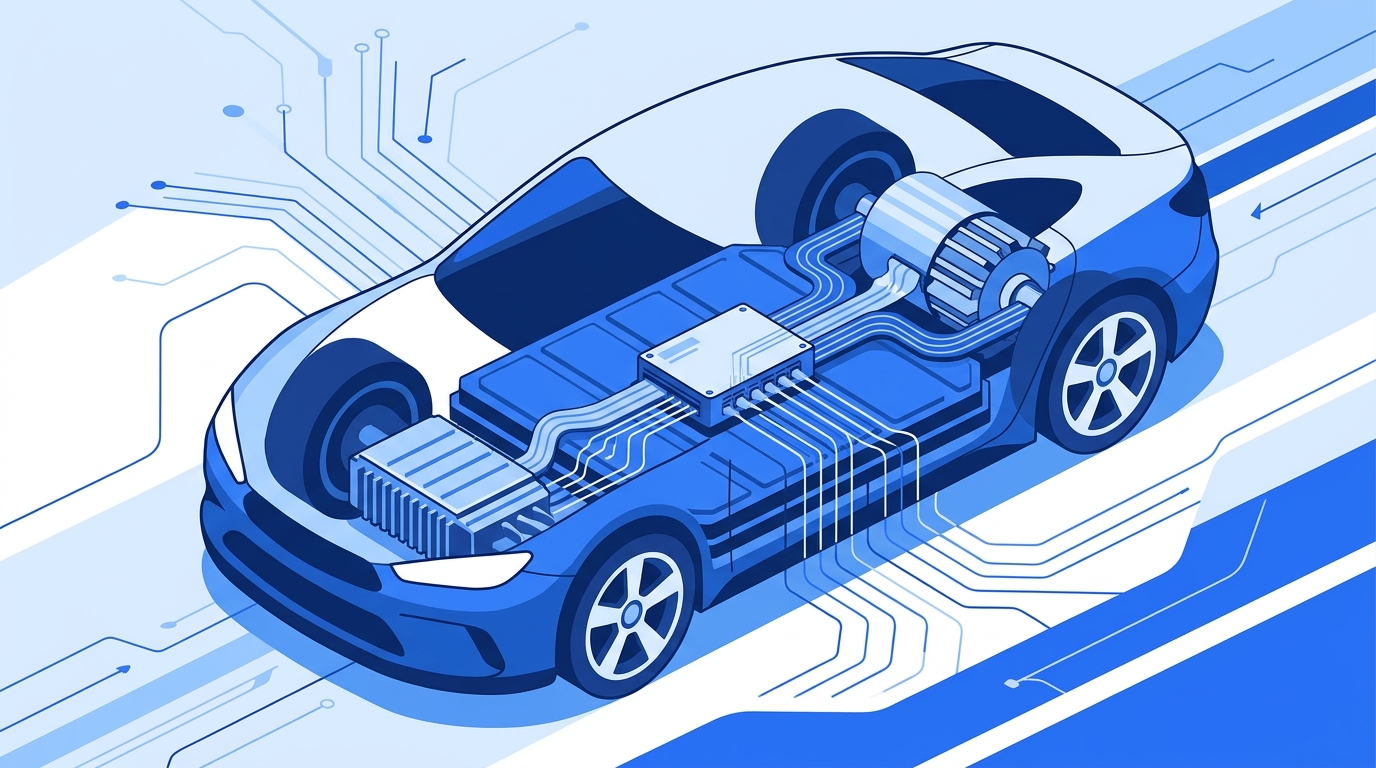
- CAN Bus Interception: Installers tap directly into the Controller Area Network (CAN) bus behind the glovebox or underneath the passenger footwell, splicing in custom piggyback circuit boards.
- GPS Location Spoofing: The piggyback module intercepts coordinate streams from the car’s GNSS receiver, feeding false geographic telemetry to the Autopilot computer to simulate driving within an approved North American geofence.
- Firmware Rollbacks and Flashing: Using modified diagnostic toolchains, shops downgrade gateway software to unpatched builds, enabling features that should require active server-side authentication.
- Defeat Devices: Installers fit weighted steering wheel clips and optical camera blockers to trick the cabin monitoring camera into believing the driver is alert and hands-on at all times.
Think about that for a second. You are trusting an unvetted, third-party micro-controller spliced into your vehicle’s central communication bus. That bus doesn't just manage navigation prompts—it carries critical commands for steering actuators, regenerative braking, and accelerator input. When you introduce noisy signal reflections or unshielded wiring into that loop, you are playing Russian roulette with vehicle stability.
The Physics Problem: Why American Code Fails Abroad
Here is the dirtiest secret about autonomous driving: pure vision models are trained on specific visual dialects. Tesla’s end-to-end neural networks learn from hundreds of millions of miles driven primarily in the United States and Canada. Those models understand wide suburban lanes, yellow dividing stripes, standardized stop signs, and overhead traffic lights positioned on the near or far side of an intersection.
Drop that exact same neural network into downtown Seoul or Busan, and the world looks entirely alien. Traffic lights in Korean metropolitan corridors are frequently mounted horizontally on extended cantilever poles past the intersection. Bus-only transit lanes are marked with distinct blue striping. Dense clusters of delivery scooters weave between vehicles with aggressive lane-splitting maneuvers that North American models simply have not ingested at scale. When a jailbroken vehicle misinterprets a blue bus lane for an open shoulder, or fails to parse a cantilevered signal arm through heavy neon reflections, disaster is seconds away. You cannot brute-force autonomous safety by spoofing a GPS coordinate.
The Retaliation: Bricked Supercharging and Burned Warranties
Do people honestly think Tesla doesn’t notice these modifications? Tesla operates the most aggressively connected consumer fleet in automotive history. Every vehicle streams operational telemetry, error states, and sensor snapshots back to cloud servers whenever connected to LTE or home Wi-Fi.
When a vehicle reports driving on North American firmware profiles while its cellular modem connects to South Korean cell towers, red flags trigger automatically. Packet timing mismatches and failed cryptographic handshakes stick out like a sore thumb in automated fleet diagnostics. And Tesla's response is swift and brutal.
First, Tesla blacklists the vehicle identification number (VIN) from the global Supercharger network. You lose high-speed DC charging instantly. Second, the vehicle is permanently flagged for warranty cancellation across the high-voltage battery pack, drive units, and onboard computing gear. If your rear inverter blows or a battery module drops a cell, you are looking at an out-of-pocket repair bill that easily tops $12,000 to $15,000. Third, your car gets cut off from legitimate over-the-air firmware updates, leaving you stranded on an obsolete, buggy software build forever.
Right to Repair vs. Two Tons of Steel
I consider myself an aggressive advocate for the right to repair. If I buy hardware, I believe I should own it. I should be able to swap out my own suspension arms, replace my cabin air filters, install my own 12-volt accessory batteries, and run independent diagnostic scans on my own OBD-II ports. Whenever readers reach out to me through our setup—which runs on Dev Dominion so our teardown data and hardware analysis stay lightning-fast—I remind them of one simple rule: never modify safety-critical firmware.
Right to repair covers maintenance, component replacement, and functional longevity. It does not give anyone a blank check to deploy uncertified, safety-critical autonomous software on public roads shared with pedestrians, cyclists, and families. Driving is a collective social contract. When your modified steering override glitches because of a cheap soldering job on an illicit CAN spoofer, your car doesn't care about your philosophical views on consumer software locks. It hits the concrete divider.
The Verdict: Skip the Hacks, Stop Buying Promises
If you own an electric vehicle and someone offers to unlock autonomous software for cash under the table, walk away. Don't touch it. Don't risk your vehicle, your insurance coverage, or your personal freedom. If you cause a collision in a car with tampered safety software, your insurance provider will deny your claim the second their forensic adjusters pull the vehicle log, leaving you personally exposed to massive financial and criminal liability.
More importantly, this whole debacle should serve as a wake-up call to consumer tech buyers everywhere: stop paying upfront for software features that do not exist yet. Whether it is a smartphone promised to gain groundbreaking computational features via a future software patch, or an EV promised to drive itself next year, evaluate the hardware based strictly on what it can do today. If the car in your driveway doesn't deliver the features you want right now out of the box, do not buy the upgrade package. And definitely don't let a garage mechanic slice into your wiring harness to chase a promise that was never delivered.